Untold Rhythms: A Deep Dive into Ghana's Highlife Music Revival
Untangling the Roots of Highlife
Ghana may often be recognized for its breathtaking landscapes and vibrant textiles, but it is the rhythmic pulse of highlife music that truly beats at the heart of this West African nation. Originating in the late 19th century, highlife weaves traditional Akan rhythms with European instruments, creating a tapestry of sound that has defined Ghana's musical identity for generations.
The genre's name emerged from a lively fusion of brass bands and traditional sounds, orchestrated to play in the social clubs frequented by the wealthy during colonial times. Yet, highlife's appeal transcends its aristocratic origins, capturing the imagination of every layer of Ghanaian society and leading to its revitalization in contemporary culture.
The Resurgence and Modern Influence
In recent years, highlife has experienced a renaissance, primarily driven by a new generation of musicians who are reimagining the genre. Young artists infuse highlife with hip-hop, Afrobeats, and reggae, crafting a dynamic sound that resonates with the world stage while staying true to its roots.
One example of this cultural revival is artist Kwame Yeboah, whose work embodies the seamless blend of traditional highlife with modern sensibilities. His music, rich with brass and string influences, creates a nostalgic yet fresh atmosphere that has made him a standout in Ghana’s vibrant music scene.
Key Players of the Revival
Examining the surge of highlife means acknowledging the artists pioneering the genre’s evolution. Osibisa, a band originally formed in London in the 1960s, is often credited with introducing and popularizing highlife on a global scale. Although they began decades ago, their sound continues to inspire today’s artists.
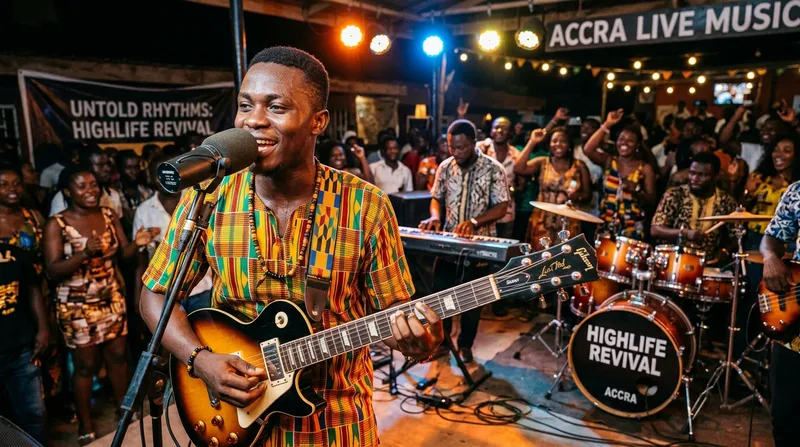
Meanwhile, the contemporary group Santrofi marries the traditional highlife with funk and Afrobeat, bringing an electric vitality to live performances. Each Santrofi show is a vivid display of cultural expression, with rhythms that prompt spontaneous dance and communal euphoria among audiences.
Highlife’s Cultural Impact
Highlife encapsulates Ghana’s storied past and curious future, serving not merely as entertainment but as a conduit for personal and national storytelling. The genre's lyrics often speak to everyday life, overlaying philosophical musings and political observations atop rhythmic beats. This unique storytelling tradition reflects a broader historical narrative, recounting Ghana's journey from colonial subjugation to a thriving, independent culture.
The influence of highlife extends beyond musicians to influence fashion, art, and even political discourse in Ghana. Events such as the annual Chale Wote Street Art Festival in Accra exemplify highlife's reach into various cultural realms. This festival showcases how music, art, and community interlace to forge a vibrant cultural dialogue.
Experiencing Highlife Firsthand
Travelers in Ghana eager to experience highlife’s full impact should consider a visit during the festive season, when towns across the country resound with music festivals and street performances. One of the most notable is the Afrochella Festival, a vibrant convergence of music, art, and youth culture held annually in December.
Beyond festivals, everyday interactions offer rich experiences; visit local bars and clubs known for live music. The Republic Bar & Grill in Accra stands out as a popular gathering spot for both locals and visitors, where live bands often play highlife into the night, transforming the space into a harmonious dance of sound and movement.
The Future of Highlife
As highlife music continuously evolves, it promises to keep shaping Ghana’s artistic and social terrains. With its embrace by forward-thinking artists and its intrinsic connection to Ghanaian identity, highlife is poised to captivate new audiences far beyond its borders.
In a world constantly seeking authentic cultural connections, highlife music offers a vibrant and genuine experience. It invites both enthusiasts and newcomers alike to immerse themselves in a sonic journey that is as layered and diverse as Ghana itself.
Discovering highlife is not just about hearing the music; it is about feeling the pulse of Ghana, learning its stories, and understanding its place in the ever-expanding mosaic of world music genres. As highlife continues to resonate deeply with those who experience it, this revival not only preserves Ghana’s cultural heritage but also ensures its relevance for years to come.