Silk and Silver: Unveiling the Craft of Uzbekistan's Ancient Suzani Embroidery
A Journey Through Time: The Origins of Suzani
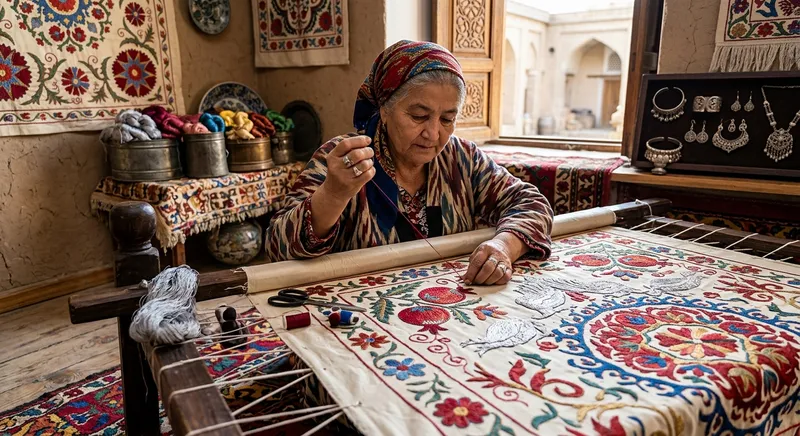
The intricate art of suzani embroidery, with its vibrant colors and intricate patterns, is a testament to the rich cultural heritage of Uzbekistan. This age-old craft, which dates back to the 15th and 16th centuries, represents a fusion of the nomadic traditions of Central Asia and the settled urban cultures that flourished along the ancient Silk Road. Originally, these fabric masterpieces adorned bridal dowries, served as bed covers, and embellished yurts, symbolizing blessings, prosperity, and protection.
Suzani, derived from the Persian word 'suzan' meaning needle, vividly reflects the cultural tapestry of Uzbekistan, where each region brings its unique flair to the artistry. The ancient cities of Bukhara, Samarkand, and Tashkent each boast distinctive designs and stitching techniques, offering a glimpse into the diverse regional identities within the country.
Stitches of Heritage: The Techniques Behind the Art
Creating a suzani is a labor-intensive process that requires patience, skill, and, above all, a deep understanding of the cultural motifs that define each piece. The work usually begins with the drawing of detailed patterns on cotton or silk fabric. These designs are often inspired by nature, featuring floral and vine motifs, sun disks, or palmettes. Although machine-made versions have gained popularity, traditional suzanis are entirely handcrafted by skilled artisans, preserving techniques passed down through generations.
The distinctive stitching styles used in suzanis, such as chain stitches, couching, and satin stitches, create a rich texture and a play of light on the fabric. Each stitch carries symbolic meaning, often intended to ward off evil spirits or invoke fertility and an abundant life.
Cultural Symbols: Decoding the Patterns of Suzani
A closer look at the motifs reveals a deep connection to the spiritual and everyday life of the Uzbek people. The pomegranate, a frequent motif, symbolizes fertility and immortality, while the tulip, ubiquitous across many suzanis, is associated with renewal and paradise. Cymbal-like sun motifs represent life and warmth, paying homage to the ancient Zoroastrian reverence for the sun.
These patterns are more than decorative—they are a vivid language through which the stories and beliefs of a culture are continually articulated and celebrated. Each suzani tells a personal or communal narrative, serving as a visual heritage passed from one generation to the next.
A Marketplace of Stories: Where to Discover Suzani
To truly appreciate suzani's artistry, one must venture into the bustling markets of Uzbekistan, where the air is thick with the scent of spices and the hum of merchants. The Siyob Bazaar in Samarkand and the Silk Road bazaar of Bukhara are vibrant hubs where artisans and sellers display their wares with pride.
Explore workshops where you can witness the creation of these intricate textiles first-hand. Many artisans delight in sharing their stories and the significance behind their designs, offering visitors not just a glimpse into their craft, but also a deeper understanding of their way of life.
The Revival of a Tradition: Suzani's Renaissance
Recent years have seen a resurgence in interest in this traditional craft, spurred by both national pride and global recognition of Central Asian textiles' beauty and cultural significance. Modern designers are finding inspiration in traditional suzani patterns, infusing them into contemporary fashion and home decor. It is this balance of preservation and innovation that ensures the survival and thriving legacy of suzani embroidery.
In Uzbekistan, suzani is more than just an embellishment; it's an enduring symbol of cultural resilience and artistic excellence. As you trace the elaborate stitches of these textiles, you not only admire a work of art but engage with a narrative that has traversed centuries, embedding itself into the very essence of Uzbek identity.