Rhythms of the Savannah: Unveiling the Dance Traditions of Kenya's Maasai Warriors
Introduction: A Dance Across the Savannah
In the heart of East Africa, where the golden savannah stretches towards a sky as boundless as the people themselves, the Maasai community continues to share its vibrant dance traditions with a world eager to learn. Renowned for their warrior spirit and colorful attire, the Maasai are also distinguished for their unique dance forms, which transcend mere cultural practice and ascend into a realm of spiritual significance.
A Tradition Rooted in History
For centuries, the Maasai people have called the sweeping plains of Kenya home. Their traditions, embedded deeply in a respect for nature and wildlife, are artfully articulated through dance. Not just entertainment, these dances are reservoirs of ancestral knowledge and collective memory, teaching younger generations about unity, strength, and resilience.
The Adumu Dance: Leaping Into Inheritance
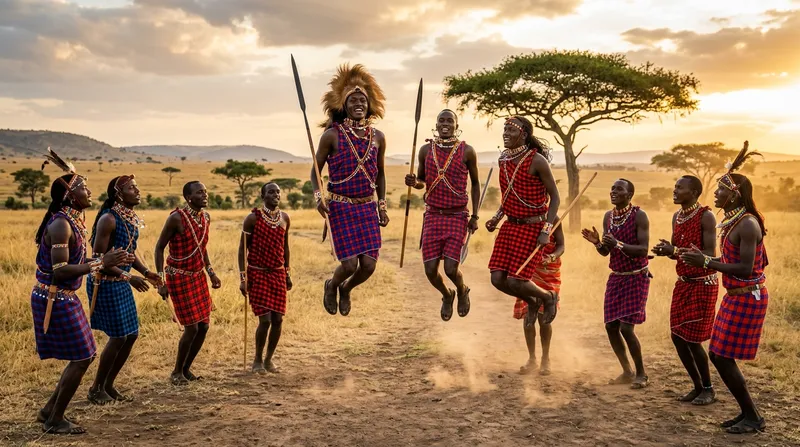
Perhaps the most iconic of Maasai dances is the Adumu, or the "Jumping Dance." This compelling spectacle involves young warriors - or morans - demonstrating their agility and stamina through high jumps while forming a circle around the dancers. Watching the Adumu is akin to witnessing a harmonious blend of kinetic human art and the boundless energy of the savannah itself.
Significance Beyond the Steps
This dance is not merely about athletic prowess; it symbolizes the vibrancy of the Maasai spirit. Each leap is an echo of tradition, a celebration of graduation from childhood to warrior status, and an assertion of community and identity. As they spring towards the heavens, these warriors bridge the gap between earth and sky, embodied aspirations taking physical form.
Embodying the Elements: Dance as a Connection to Nature
The Ceremonial Olkeleuni: Ancestral Echoes in Every Step
Another profound dance tradition prevalent among the Maasai is the Olkeleuni. This beautiful ceremonial dance accompanies critical community events, such as weddings and coming-of-age ceremonies. The Olkeleuni encapsulates the rhythmic patterns of rain and wind, echoing the natural rhythms that govern Maasai life.
In each beat and every sway, the dancers express gratitude to their environment, and reinforce unity among the community. Bodies lean and flow in synchrony, much like how blades of grass sway in the savannah breeze, symbolizing the interconnectivity of all forms of life.
Spiritual Significance: Guardians of Culture
Maasai dances are more than dynamic displays of human dexterity; they are spiritual expressions that respect the land and its stories. Embedded in these rhythms are a protective invocation for health, prosperity, and harmony within the group.
Contemporary Celebrations: A Cultural Exchange
Modern Influences and Preservation Efforts
In an ever-globalizing world, the Maasai community faces pressures exerted by modernity and external influences. Yet, this cultural stalwart continues to find resonance with audiences worldwide. Tourists visiting Maasai lands are often invited to witness traditional dances, fostering dialogue between cultures.
Festivals as Cultural Homes
Events such as the Maasai Mara Cultural Festival provide platforms for showcasing these timeless traditions. The festival celebrates the resilience of Maasai culture through dance, illustrating its continued evolution and significance in a rapidly changing world.
Conclusion: Protecting the Pulse of the Past
The vibrant dance traditions of the Maasai are treasures of cultural heritage and vivid expressions of their connection to the land and to each other. As these dances are passed down through generations, they continue to serve as poignant reminders of the Maasai's indomitable spirit and their profound legacy as the guardians of Africa's traditions. In experiencing these performances, one doesn’t merely observe; they partake in a living history, a dance across eternity.