Rhythms of Reverence: Immersing in the Sacred Dance of Bali's Temple Ceremonies
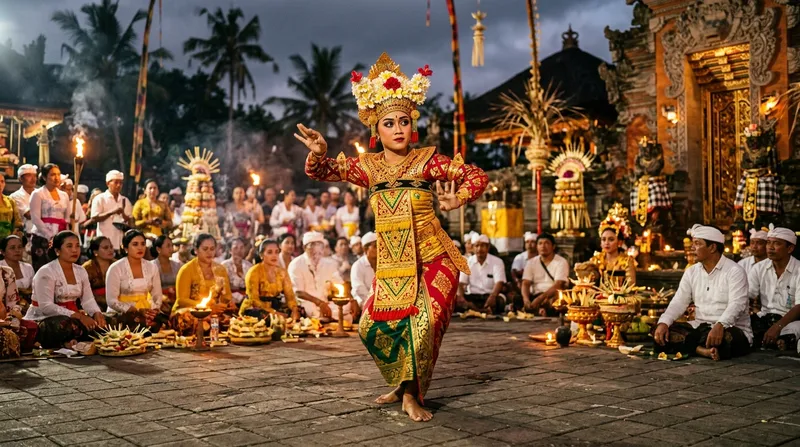
Introduction to Bali’s Sacred Dance Traditions
Long hailed as the 'Isle of the Gods,' Bali is not just a paradise of sun-kissed beaches and terraced rice fields. It is a living tapestry of rich cultural traditions, woven together by the sacred dances that punctuate its religious ceremonies. This article unravels the intricate connections between the island's rhythmic dances, vibrant temple rituals, and the spiritual beliefs of its people.
The Intersection of Dance and Devotion
Balinese Dance: A Divine Offering
In Bali, dance transcends mere entertainment—it's an offering to the divine. As night falls over the island's temples, shadows flicker against stone walls, and the air hums with gamelan melodies. With hands poised and faces expressive, Balinese dancers enrapture their audience, re-enacting the timeless narratives of Hindu epics like the Ramayana and Mahabharata. Each performance, precise and deliberate, is steeped in prayer and meditation, intended to appease deities and bring prosperity to the land.
The Temple Ceremonies: A Conduit to the Sacred
At the heart of Bali's spiritual calendar are its temple ceremonies, known as 'odalan' or 'piodalan'. These events mark the anniversaries of temple founding dates, drawing locals in elaborate attire, bearing offerings of woven palm leaves, fruits, and flowers. The ceremonies are a microcosm of Balinese life, embodying a tradition known as 'Tri Hita Karana'—a harmony between the human, the natural world, and the divine. Dance performances are crucial to these rituals, serving as channels for spiritual energy between the earthly and divine realms.
The Dance Forms: Identity and Expression
The Kecak Fire Dance: A Communal Chant
Arguably one of Bali’s most iconic cultural experiences, the Kecak dance, often performed against the backdrop of sun-kissed cliffs or moonlit temple grounds, features a chorus of bare-chested men chanting 'chak-chak-chak' rhythmically. This mesmerizing audio-visual spectacle, commonly known as the 'Ramayana Monkey Chant', is a reenactment of a scene from the Ramayana where the monkey-god Hanuman helps rescue Sita from the demon king Ravana. Kecak is notable for its lack of instruments, relying solely on human voices to produce its hypnotic rhythm.
Legong and Barong: Tales of Romance and Combat
The Legong dance, known for its intricacy and poise, showcases young dancers who step through elaborate patterns, their eyes darting expressively, telling tales of romance and eternal youth. In contrast, the Barong dance embodies the eternal battle between good and evil, represented by the benevolent Barong and the menacing Rangda. These performances are not only an entertainment but a ritual act that aligns human actions with cosmic cycles.
Experiencing a Temple Ceremony: Practical Tips
Timing Your Visit
Bali's temple ceremonies are governed by the lunar calendar, making their timing somewhat elusive for the uninitiated visitor. Engage with local communities or consider staying at family-run lodgings to glean insights into the precise timings of these rituals. Popular ceremonies often align with full or new moons when spiritual energies are believed to peak.
Respectful Observance
While spectators are usually welcomed, it is paramount to respect the sacredness of the events. Always dress modestly—either bringing or renting a sarong and sash—is customary, as is removing footwear before entering temple grounds. Being an observer rather than a participant maintains the sanctity of the ritual. Feel free to ask local guides or hosts for advice on etiquette to ensure an appreciative, respectful experience.
The Cultural Impact of Balinese Dance
Preserving Heritage Amidst Modernity
As tourism burgeons, Bali faces the challenge of balancing economic gains with cultural preservation. Dance troupes and cultural groups play pivotal roles in perpetuating these ancient traditions, ensuring they adapt yet stay true to ancestral roots. Efforts to integrate cultural education into tourism experiences, such as dance workshops and storytelling evenings, not only preserve traditions but also enrich visitors with genuine cultural exchanges.
Global Recognition and Influence
Balinese dances have gradually captivated audiences far beyond the island's shores, featuring in international media and inspired artistic expressions worldwide. UNESCO’s recognition of Balinese dance as an Intangible Cultural Heritage further underscores its global significance, celebrating it as a vital cultural legacy.
Conclusion: A Call to Cultural Immersion
In visiting Bali, you are afforded an opportunity to experience not just its breathtaking landscapes but the deep, rhythmic heart of its culture. Attend a temple ceremony, let the haunting gamelan music wash over you, and watch as dancers breathe life into stories retold through centuries. By immersing yourself in these traditions, you contribute to their ongoing vibrancy, becoming a part of Bali's living tapestry.