Invisible Secrets: Weaving Through the Ancestral Textile Markets of Otavalo
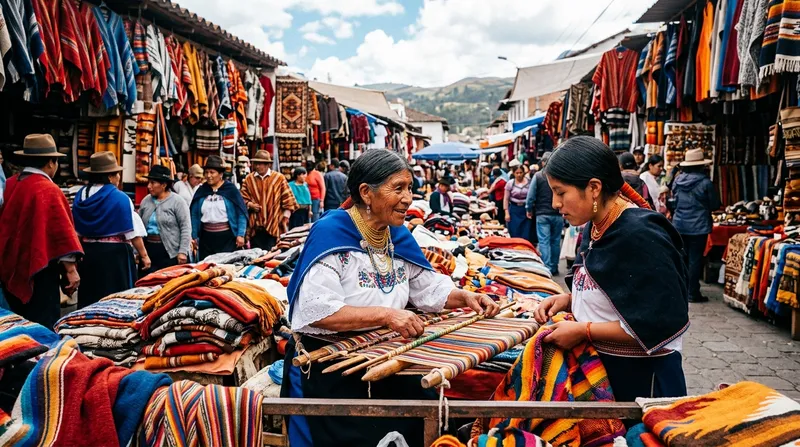
Nestled in the Andean highlands of Ecuador, the bustling town of Otavalo cradles a treasure trove of vibrant colors and traditional artistry. It is here that the beating heart of Otavalo's culture reveals itself in its famed textile market—a fusion of ancestral craftsmanship and a testament to the region's rich indigenous heritage.
A Journey Through Time
The Otavalo textile market dates back centuries and has evolved into one of South America's most significant indigenous markets. From the moment you step through its vibrant corridors, you are enveloped in a kaleidoscope of colors. Each stall bursts with intricately woven tapestries, hand-embroidered garments, and a plethora of accessories, all echoing the tapestry of time itself.
Ancestral Techniques and Modern Designs
Each textile in the market isn't merely a piece of cloth; it's a story woven by skilled hands. The Otavaleños are renowned for their weaving skills, a craft passed down through generations. They use traditional backstrap looms to weave intricate designs that reflect both ancestral symbols and modern artistry. The vibrant hues are often derived from natural dyes, showcasing an age-old commitment to sustainable practices.
The Artisans Behind the Craft
Engaging with the artisans offers a deeper understanding of the cultural significance behind each textile. Many vendors hail from nearby indigenous communities, such as the Quichua, and bring their artistry to the heart of the market. Conversations with these craftsmen and women reveal tales of inherited techniques that stretch back to pre-Columbian times.
More Than Just a Market
Experiencing the Community
The market is not just a place of commerce, but a vital community hub. Locals and visitors alike gather here, not only to purchase goods but to exchange stories and celebrate their shared cultural heritage. On market days, the atmosphere is electric, filled with the sounds of Quichua music and the rich aroma of street food stalls offering traditional Andean delicacies.
Cultural Immersion: Workshops and Demonstrations
For those seeking a more immersive experience, workshops and demonstrations are offered by local artisans. These sessions provide hands-on opportunities to learn about the weaving process, from spinning raw wool to forming complex patterns using traditional methods. Such experiences not only enhance appreciation but also ensure these invaluable skills are passed on to future generations.
Beyond Textiles: A Wealth of Local Produce
While textiles are the star attraction, the market bustles with a variety of other offerings. Traditional jewelry, carved wood, and locally grown produce are all part of the mix. Artisanal food products such as chocolate and hand-milled grains highlight the area's rich agricultural bounty, making Otavalo a feast for both the eyes and taste buds.
Insider Tips for the Intrepid Traveler
Making the Most of Your Visit
To fully appreciate the market, it’s best to arrive early, as the morning light delicately casts an ethereal glow over the stalls, enhancing their vibrant colors. Negotiation is expected, so honing your bargaining skills can enhance the experience of purchasing a truly unique souvenir.
For those with more time, the surrounding areas offer additional cultural and natural wonders. The nearby Peguche Waterfall, revered by the locals, provides a serene escape, while the local haciendas invite you to step back in time, offering insights into the region's colonial past.
Respecting the Culture
Visitors are encouraged to respect the local practices and customs. Asking permission before taking photographs of the vendors or their products is courteous, ensuring that the cultural exchange remains mutual and respectful.
A Tapestry of Narratives
Visiting the Otavalo textile market is more than a shopping experience; it’s a journey through time, culture, and tradition. Each thread and stitch tells a tale of an enduring legacy, inviting travelers to embrace the vibrant tapestry of Ecuadorian craftsmanship. In the bustling corners of this market, commerce and culture entwine, offering a rare insight into the lives and legacies of the people who call this breathtaking region home.