Echoes of Ritual: The Intricate Dance Language of the Kecak in Bali
Discovering the Island's Sonic Enchantment
In the heart of Bali, a mesmerizing cultural dance ritual awaits those who wish to venture beyond the island's famed beaches and terraced rice paddies. The Kecak, often dubbed the 'Monkey Chant,' is an iconic Balinese dance form that finds its roots in ancient fables and religious traditions. With no musical instruments accompanying its vivid storytellers, the Kecak relies solely on the rhythmic chants of its performers, drawing audiences into a world where sound and movement breathe life into age-old myths.
The Origin of the Kecak
Unlike many of Bali's dance styles that are steeped in centuries-old tradition, the Kecak has a relatively modern origin. Developed in the 1930s by Balinese artist Wayan Limbak in collaboration with German painter Walter Spies, the Kecak was influenced by the ritualistic 'Sanghyang' trance dance and the classical Hindu epic, the Ramayana. This performance has grown into a symbol of Balinese artistry, offering both locals and tourists a glimpse into the island's mythological and spiritual landscape.
Setting the Stage
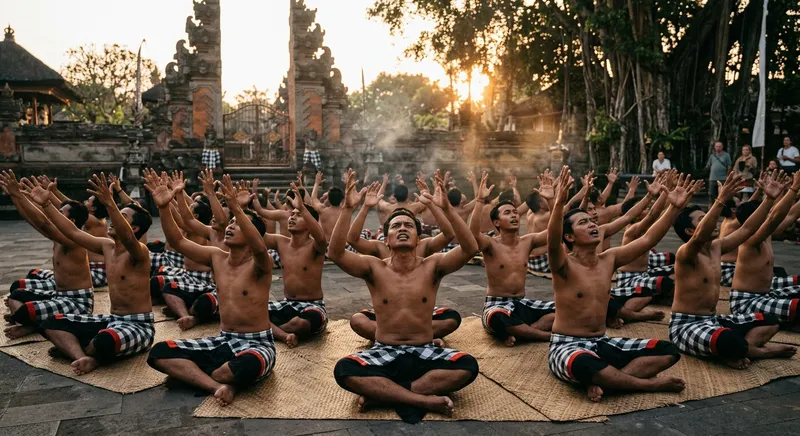
A typical Kecak performance unfolds against the backdrop of a sacred Hindu temple or amidst the lush natural surroundings of a Balinese village. As the sun dips below the horizon, casting a warm glow over the undulating landscape, hundreds of male performers, seated in concentric circles, begin to chant 'chak' in hypnotic unison. Wearing vibrant sarongs and flowered headbands, the men sway rhythmically, their voices rising and falling like the cresting waves along Bali’s pristine shores.
A Dance of Devotion and Drama
At the core of the Kecak lies the dramatic narrative of the Ramayana—a tale of love, betrayal, and triumph, bringing to life the epic journey of Prince Rama's quest to rescue his beloved wife, Sita, from the clutches of the demon king, Ravana. As the chant reaches its crescendo, elaborately costumed dancers burst into the circle, embodying characters like the gallant Hanuman, the cunning Ravana, and the virtuous Rama and Sita. Their synchronized movements and expressive gestures render the story in a vivid tableau that transcends language, drawing spectators into the realm of divine battles and heroic exploits.
The Role of Trance
The energy of the Kecak does not merely rest in its storytelling and hypnotic rhythm but is deeply tied to its roots in the 'Sanghyang' trance dance. Traditionally believed to summon protective spirits, the trance element is especially palpable when, towards the end of the performance, dancers engage in daring fire-walking rituals, believed to be under divine protection. This electrifying ambiance fosters a palpable connection between the performers and the audience, who find themselves swept into the ritual's transcendental tide.
Experiencing the Kecak
For those eager to witness this cultural spectacle, several popular venues offer nightly performances. Among them, the clifftop amphitheatre at the Uluwatu Temple is perhaps the most enchanting, where the dramatic dance unfolds against a breathtaking oceanic sunset. The artistic town of Ubud also hosts numerous performances, providing an intimate glimpse into the local artistic spirit that pervades this heart of Balinese culture.
The Cultural Impact of the Kecak
The Kecak dance stands as a testament to Bali's rich tapestry of artistic expression, where tradition and contemporary creativity intertwine. Its ability to evoke a sense of shared community through art has strengthened its position as an essential part of cultural preservation and education in Bali. By attending a Kecak performance, visitors not only gain insight into Balinese spirituality and social customs but also contribute to the ongoing support of traditional arts that define the cultural vibrancy of the island.
A Lasting Echo
As the final notes of the Kecak fade into the night, they leave behind an echo of rich cultural legacy—an invitation to delve deeper into the rhythms and stories that shape humanity's myriad experiences. Immersing in the Kecak is an exploration of both the soul of Bali and the universal power of storytelling, where ancient tales remind contemporary audiences of our shared past, present, and future.