Chronicles of the Bull: Unraveling the Mysteries of Spanish Bullfighting Culture
An Ancient Dance Between Life and Death
To truly understand the soul of Spanish culture, one must peer into the heart of its most polarizing and enduring traditions: bullfighting, or la corrida de toros. This spectacle, often perceived as a brutal contest, is deeply entrenched in the country's history, embodying a ritualized dance that teeters between vivid artistry and stark exhibition of mortality.
Bullfighting's roots are tangled in the ancient past, stretching back to the Iberian Peninsula's representation of power and struggle. It evolved under the shadow of various dominantly ruling civilizations, from the Romans to the Moors, each adding layers to the rich tapestry of what bullfighting represents today.
The Ritual and the Ring
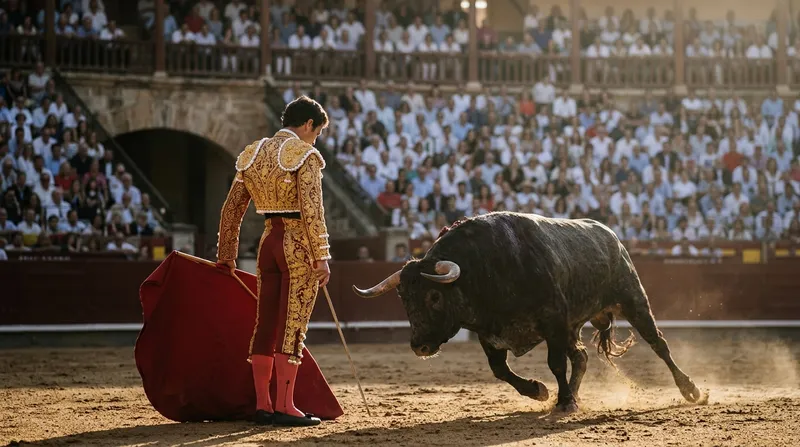
Picture a sun-dappled afternoon in the heart of Spain, where the air buzzes with anticipation. The centuries-old plaza, its circular arena ringed with eager spectators, stands as a monument to tradition. As the bull bursts into the ring, the crowd's hushed thrill crescendos. With a skillful capote (cape) and swift flourishes, the matador commands respect from both the beast and the audience.
The ritual is divided into three acts known as tercios. Each act unravels the relationship between bull and matador with deep symbolic efficacy and breathtaking choreography. The _picador_ enters on horseback, weakening the bull with a lance, setting the stage for the _banderilleros_ to strategically place colorful sticks into the bull's shoulders. Finally, the matador emerges to perform the _faena_, a dance of bravery and closeness, poised with sword in hand.
The Cultural and Ethical Dilemma
Bullfighting is a canvas where tradition clashes with modern ethical considerations, stirring passionate debates across the globe. In some regions, the practice is viewed as a proud cultural heritage, inseparable from Spanish identity; yet, to its critics, it represents outdated cruelty, sparking protests and demands for abolition.
The dichotomy sharpens as autonomous communities within Spain hold varying attitudes towards bullfighting. In parts of Catalonia, for instance, the tradition was banned in 2010, only for the decision to be overturned six years later. Yet, the societal pendulum swings, with the younger generation increasingly leaning towards animal welfare.
Symbolism and Elegance: The Role of the Matador
The matador plays an iconic role not just in the arena, but in the cultural psyche of Spain. Draped in a dazzling suit of lights (_traje de luces_), the matador embodies elegance, courage, and a strange paradoxical gentility. Their rigorous training is akin to that of a ballet dancer—every movement calculated, every step a reflection of deep respect toward their formidable opposition.
This dance of death elicits both horror and adulation, creating a pathos that extends beyond mere performance. For many matadors, the arena is a theater of personal valor—a place where their life story unfolds with each perilous encounter.
Beyond the Arena: Bullfighting's Influence on Arts and Literature
The impact of bullfighting transcends the physicality of the arena, leaving indelible marks on Spanish arts. From the vivid paintings of Francisco Goya to the textured prose of Ernest Hemingway, bullfighting has inspired countless artists and writers, its episodes captured in oils and ink, forever immortalized in cultural memory.
Goya's stark depictions of bullfighting scenes reveal reverence and critique within the same brushstroke, while Hemingway's `Death in the Afternoon` provides a compelling literary exploration, intertwining admiration with critical introspection.
The Future of an Age-Old Tradition
The future of bullfighting remains uncertain, as cultural preservation standoffs confront ethical evolution. Some envision a possible metamorphosis—where tradition might adapt and innovate, merging safety with spectacle while respecting animal rights.
Despite conflicting perspectives, la corrida persists at the heart of Spanish culture’s evolution, inviting visitors and Spaniards alike to grapple with the complex interplay of past and present, life and loss, art and protest.
If you find yourself wandering the historical tapas trails of Seville or traversing the vibrant plazas of Madrid, take a moment to consider the weight of this practice, wherein the value of tradition, the spirit of artistry, and the call for compassion converge on the sands of the bullring.