Artistry in the Alleyways: Exploring Morocco's Hidden Talaa of Fez
A Cultural Kalediscope in Fez
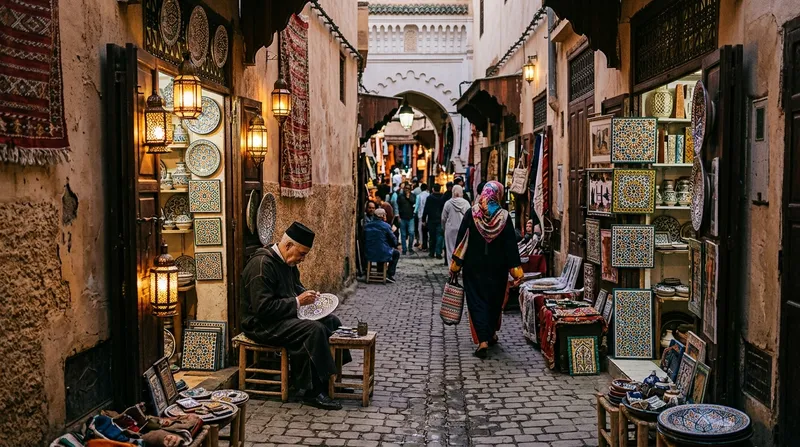
Tucked away in the heart of Morocco lies a city that beckons travelers to step back in time: Fez. Known for its sprawling medinas, this city offers more than lively souks and aromatic tagines. It’s a living museum of Arab culture and ancient craftsmanship, where art thrives amid the alleys, or talaa, as the locals call them. Brimming with artisans' intricate work, these narrow passageways weave through history like the vibrant threads of a Berber rug.
Navigating the Narrow Talaa
The labyrinths of Fez el-Bali, the oldest part of the city, invite you to lose yourself. Visitors will find themselves immersed within a cacophony of the past and present: donkey-pulled carts brushing against adobe walls, craftsmen hammering copperware, and the echoing call to prayer from hundreds of minarets. Each talaa plays host to its own patchwork of sights and scents.
Wander along Talaa Kebira, one of the main arteries of the medina, where districts of leather tanneries sit cheek by jowl with perfume sellers and spice stalls. The colorful dyes from the Chouara Tannery spill into pools like a painter’s palette, offering photographic delights alongside a testament to the city’s enduring traditions.
A Legacy of Learning: Al-Qarawiyyin University
Seated in the medina is a beacon of knowledge and cultural exchange—the Al-Qarawiyyin University, recognized by UNESCO as the world’s oldest degree-granting institution, founded in AD 859. Its venerable libraries have witnessed the passage of scholars from different ages seeking enlightenment in this medieval epicenter of education and culture. The architecture itself tells a story through its arcades and zellij tile work, echoing the timeless blend of Islamic and Andalusian influences.
Craftsmanship Carried Through Generations
Artisans in Fez hold sacred the techniques passed down through generations like heirlooms. The woodworkers, or najjar, can be seen meticulously chiseling pieces that will adorn mosques or palaces. Leatherwork, vibrant ceramics, and textiles like brocade and embroidered caftans reflect the city’s historical connectivity to both East and West.
Each piece carries whispers of African, Arab, and Andalusian artistic traditions, a synthesis emblematic of Morocco's cultural mosaic. The Fassi pottery in particular, with its characteristic blue and white patterns, remains a cherished symbol linked closely to the city’s identity.
Stories in the Hand of a Fassi Artisan
One afternoon, amid the aromatic tanneries, I encountered Master Hammadi, a silversmith with tales etched within the soft lines of his sun-worn face. "Each design is a fingerprint," he tells me. "We share in moments when tourists find something made just for them, something that speaks beyond language." In this humble corner of Fez, art is both preservation and revelation.
He randomly picks up a thuluth script pendant, its arabesque patterns capturing the fading daylight. "To work as our ancestors did, with infinite care and patience, is a story we tell again and again," Hammadi reflects, glancing at the tools he inherited from his father.
The Future of Fez's Artisanal Landscape
Although the world modernizes, Fez remains dedicated to sustaining its artisanal tradition. Initiatives to support young artisans ensure skills are not lost; workshops and cooperatives sew economic threads into the socio-cultural tapestry of this ancient city.
The medina, while deeply historic, echoes with ambitious calls for balancing heritage conservation with contemporary needs. Fez’s talaa continue to thrive as vibrant cultural arteries, intertwining artists' dedication with the curious hearts of travelers.
Visiting Fez: What You Need to Know
For those planning to embark on a cultural expedition through Fez, timing is essential. The cooler months from October to April offer the best climate for wandering the medinas. Stay in a traditional riad to fully experience the charm of Moroccan hospitality—their verdant courtyards serving as tranquil havens.
Remember to wear comfortable shoes for navigating the cobblestones, and consider enlisting a local guide to unlock stories hidden within unassuming walls and alleys. As you walk through these ancient thoroughfares, embrace the chance to become part of a living history, where every turn opens a doorway to tales untold.
Final Thoughts
In Fez, time feels elastic—every corner a new chapter in the story of a city that dances between its illustrious past and vibrant present. As travelers, immersing in Fez’s talaa means engaging with art that spans beyond visuals, connecting us to the heart of Moroccan culture and the artisans who animate it. Let the city invite you in, guide you through its ancient passageways, and paint your journey through its artistic heart.