Waves and Wonders: Navigating the Remote Coastlines of Madagascar
Introduction
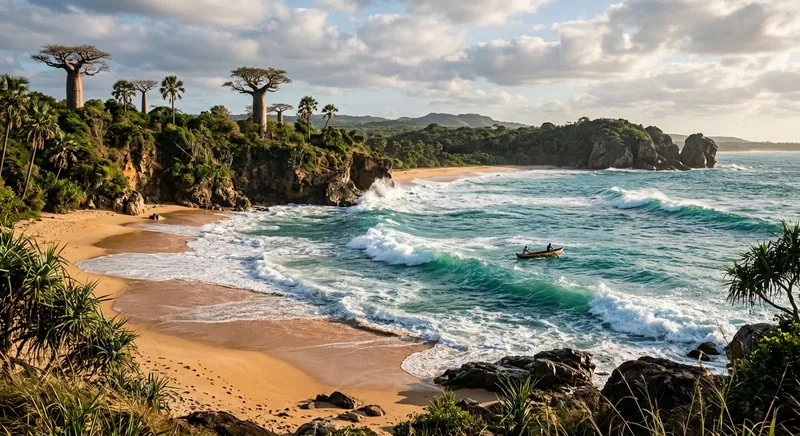
Madagascar, a jewel lying in the kaleidoscope of the Indian Ocean, is a land where nature's fantasy comes alive. While its bizarre flora and fauna often steal the spotlight, its majestic coastlines are an alluring mystery to travelers seeking solitude and natural beauty. From palm-fringed beaches to mesmerically blue lagoons, Madagascar’s shores promise a treasure trove of discoveries.
Venture Beyond the Known
Tides of Tranquility: Nosy Be and Its Environs
The most accessible of Madagascar’s islands, Nosy Be, rightly earns its nickname, 'Perfumed Isle.' With its balmy climate and lush landscapes, a journey here feels as fragrant as the ylang-ylang plantations that line the air. From here, adventurers can explore neighboring islands like Nosy Komba and Nosy Tanikely, each offering pristine snorkel-ready waters and vibrant marine life.
On Nosy Tanikely, let the tide tug you into its underwater sanctuary while above, the crystalline sand sparkles like jewels against the sunlight. Coral reefs burst with color beneath the waves, where encounters with turtles and a rainbow of fish become memories that linger long after the journey ends.
The Virgin Sands of Anjànjavy
Beyond the tourist map lies Anjànjavy, an oasis of tranquility hidden between a sweep of golden beaches and a verdant nature reserve. Its remote location guards it against the usual tourist influx, making it a precious haven for those who embark on a journey into the untouched.
Getting here is an adventure in itself—consider a charter flight, with the skies removing the curtain on a spectacle of chameleon-hued landscapes below. Past the sand, the Anjànjavy forest beckons, rich with endemic species like cocquerel sifaka lemurs and the rare venturous Anstay.
Embrace Local Culture
Connect with Coastal Communities
Madagascar's western coast is more than a mere backdrop of stunning beaches; it's interwoven with vibrant local communities. In villages where time-honored fishing practices survive modern-day influence, travelers will find opportunities to partake in authentic cultural exchanges.
Engage with the Vezo people, fisherman nomads of the shores, whose lives ebb and flow with the ocean's rhythm. A guided journey with them unravels secrets of traditional pirogue sailing and fish harvesting methods passed down through generations. Visitors find a warm welcome here, where smiles and open-hearted generosity are an offer not just of hospitality but of familial connection.
Navigating the Journey
Travel Tips for the Intrepid Soul
Seasonal Sensibilities: The best time to explore Madagascar’s coasts is during the cool, dry season from May to October. Be prepared for fluctuating conditions—pack adequate sun protection and water-resistant clothing.
Getting Around: While internal flights save time, consider renting a 4x4 vehicle for an authentic experience of Madagascar's rugged landscapes and coastal roads.
Accommodation Insights: From eco-lodges nestled amid nature to rustic beachside bungalows, options for accommodation are as diverse as Madagascar’s ecosystems. Booking in advance is advisable, particularly for remote locations.
Environmental Etiquette
Conscientious travel is paramount in preserving Madagascar's natural beauty. Respect the delicate ecosystems by adhering to sustainable practices, such as minimizing plastic use and supporting local conservation efforts. Engage in community-based tourism projects that prioritize environmental preservation and community benefit.
Conclusion
Madagascar’s remote coastlines are a captivating escape into a world that feels entirely distinct from the well-trodden paths of global travel. For those yearning for connection with both nature and people, Madagascar offers a sanctuary where bold landscapes and untamed wildlife harmonize with gentle shores and vibrant cultures. Embrace this extraordinary adventure—tune into the rhythms of Madagascar’s waves and wonders.