Embracing Eternity: Journey into Ethiopia's Rock-Hewn Churches of Lalibela
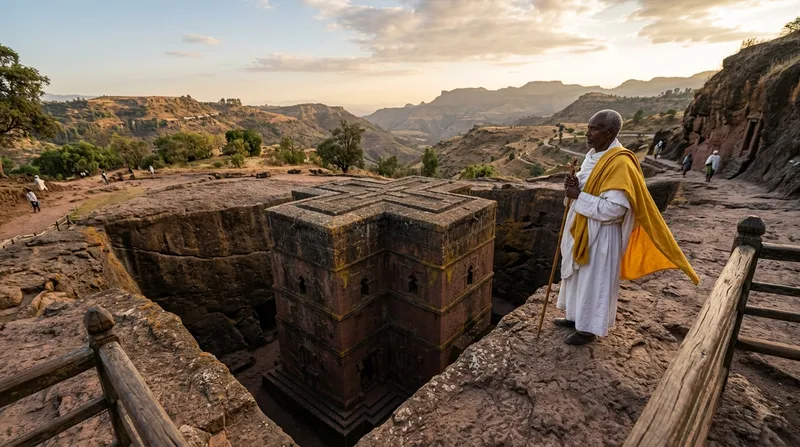
A Sacred Pilgrimage to Lalibela
Nestled high in the Ethiopian Highlands, amidst a landscape that feels touched by some divine hand, lies a cluster of structures that seem impossibly crafted. Lalibela's rock-hewn churches are not just a national monument but a spiritual journey, beckoning travelers to step back into a time where the hands of art met divine intent.
Stepping into History: The Legend of Lalibela
According to legend, the town of Lalibela was constructed during the reign of King Lalibela during the late 12th century. It is said that angels assisted the king in the construction of these monolithic churches, creating a realm of worship intended as a 'New Jerusalem.' The churches were meticulously carved into the rugged volcanic rock, each telling stories of biblical lore and Ethiopian Christian traditions.
Architectural Feats Beneath the Earth
A Marvelous Complex of Worship
The most striking feature about the churches of Lalibela is that they are not built but rather sculpted into the earth. The precision with which each church is carved, creating splendid interiors from single blocks of stone, is an enduring source of wonder.
Bete Medhane Alem, or the House of the Savior of the World, holds the record as the largest monolithic church in the world. Its grand colonnades and imposing size echo the ambition of its creators.
Bete Giyorgis, dedicated to St. George, is iconic for its cruciform shape, visible from the sky, as if etching a perpetual blessing onto the land.
Each of the eleven churches features elaborate interior artwork, with designs that have managed to survive harsh climates and human conflicts, standing as a testament to the resilience of faith.
The Journey Along the Footpaths of Faith
Exploring Lalibela is as much about the journey as it is about the destination. The town pulsates with life on religious occasions, particularly during Orthodox Christian celebrations. Pilgrims clad in white, carrying prayers and chants, paint a scene of timeless spirituality.
A Climatic Trek Through History
Though the trek through the highlands may be grueling, every step brings forth a piece of history. The earthy scent after a morning rain envelops you, and the morning mists that drift across the valley are coupled with the chants from the churches, orchestrating a symphony of nature and spirituality.
Beyond the Stone: The Cultural Tapestry of Lalibela
Travel to Lalibela not only reveals impressive architecture; it uncovers a vibrant culture woven through its music, traditions, and markets.
The Markets of Lalibela
In the shadows of these monumental churches, the local markets offer a tapestry of life. Often bustling with activity, these markets feature handcrafted goods, local produce, and a chance to interact with the people who call this sacred place home.
Echoes of Ethiopia: Music and Dance
The rhythmic sounds of traditional Ethiopian music reverberate against stone, while people engage in the Eskista dance—a traditional dance characterized by agile shoulder movements—drawing every visitor into its graceful narrative.
Preserving a National Treasure
Modern Challenges
While Lalibela stands formidable, the challenges of modern erosion and tourism pressures are significant. Preservation efforts are critical to maintain the integrity of these ancient structures without losing the authenticity of their spiritual allure.
Visiting Lalibela: A Practical Guide
To experience the depth of Lalibela, consider timing your visit during the Ethiopian Orthodox festivals of Genna (Christmas) or Timkat (Epiphany), when the town vibrates with an otherworldly energy. Be prepared for narrow passageways and steep climbs, which require both good physical stamina and a respect for the spirituality of site.
Accommodations in Lalibela range from rustic lodgings to more modern establishments, allowing travelers to explore the sites comfortably without undermining the sacredness of their experience.
Conclusion
Journeying through the timeless paths of Lalibela brings you closer not only to history embedded in stone but to a living tradition that continues to inspire. As you stand amidst these ancient walls, the serenity and the echoes of age-old prayers foster an introspective connection within, leaving you transformed by the mysteries of this Ethiopian marvel.