Climbing Peaks and Chasing Stars: A Night Under Patagonia’s Starlit Skies
Introduction
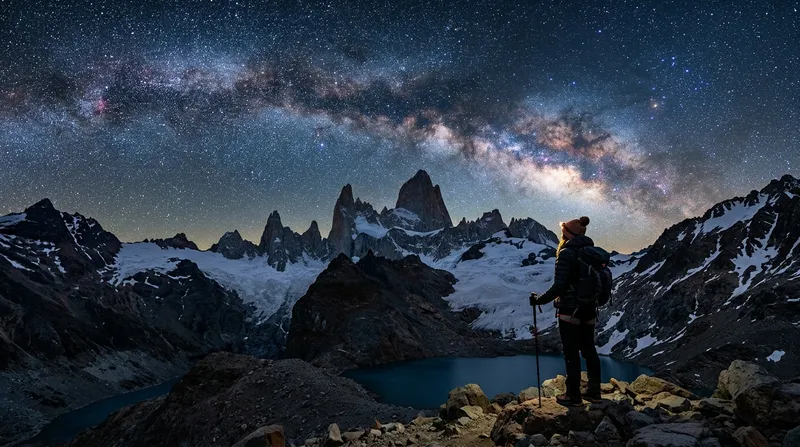
Nestled at the edge of South America, Patagonia is a siren call for adventurers yearning to conquer unspoiled wilderness and witness one of the planet’s most profound celestial phenomena. By day, intrepid hikers scale jagged mountains; by night, vast skies unveil the shimmering constellations guiding explorers through ancient navigation.
The Allure of Patagonia’s Wild Landscapes
Patagonia's geography is a mesmerizing patchwork of snow-capped mountains, sprawling glaciers, and azure lakes. The region’s dramatic landscape, stretching from Argentina to Chile, offers varied terrains that act as a playground for adventure seekers. The Andes, slicing through its heart, are blanketed in snow and challenge climbers to push their limits against gusting winds and sheer, granite spires.
Marveling at the Towers of Paine
Arguably the crown jewel of Patagonia’s natural wonders is Torres del Paine National Park. Here, the iconic towers — Los Cuernos, Los Torres — pierce the sky, telling tales of geological tumult and time. Hikers tackle the renowned W Trek, a circuit weaving through lush valleys, icy rivers, and stark lunar landscapes. Every ascent is rewarded with heart-stopping vistas, promising awe for every step taken.
Preparing for the Climb
Embarking on a trek across the Patagonian range requires meticulous preparation. Weather conditions can change on a whim, transforming moments of sunshine into chilly, rain-soaked ordeals. Ensuring proper gear is vital — layered clothing, sturdy hiking boots, and equipment to withstand the unpredictable elements are non-negotiables.
Don't base your pack on necessity alone; there's magic in being ready for spontaneous exploration. Consider lightweight, portable telescopes or binoculars to get closer to the wonders you’ll not want to miss.
Beneath the Starlit Canvas
As day yields to dusk, Patagonia transcends its terrestrial beauty, revealing another side of its allure — a sprawling starlit canopy unmatched in clarity. Far from urban light pollution, this remote region offers one of the few truly dark skies on earth.
The Southern Hemisphere’s Celestial Show
Gaze upward to be greeted by the Southern Cross, glittering against a backdrop painted with the Milky Way's majesty. In the winter months, the vivid red hues of Mars may join the display, captivating with their extraterrestrial glow.
One might experience the etheric luminescence of auroras australis, spirits of light dancing across the heavens. These phenomena, ethereal and iconic, create an otherworldly spectacle that etches memories into the soul.
Guided Tours: Expert Insight Adds Depth
For those seeking deeper insights into the cosmic wonders above, engaging with local guides proficient in astronomy enriches the nocturnal experience. A guided stargazing tour can unveil lesser-known marvels — the Magellanic Clouds, twin galaxies, and star clusters invisible to the naked eye.
Connect with Patagonia’s Indigenous Roots
Recounting stories of stellar origins, indigenous peoples, such as the Mapuche, weave myth and legend into the cosmos. Their tales offer a cultural layer, linking you to ages past where stars were more than guides — they were ancestors.
Adventure Awaits
If Patagonia’s dramatic peaks and celestial shows call you to adventure, remember the essential respect it demands. Carry out what you bring in, the silence is its echo. In this land of monumental beauty and silence, your senses awaken as you stride past wind-swept lakes and listen to the crackling of ice beneath the immense southern skies.
Conclusion
Whether scaling its jagged peaks or tracing the spiral arms of the Milky Way, Patagonia promises a voyage that challenges the body and enchants the soul. Under the gleaming, icy spires and eternal starscapes, you find stories and stars intertwining, offering an exploration as rich as the Patagonian soil itself.